
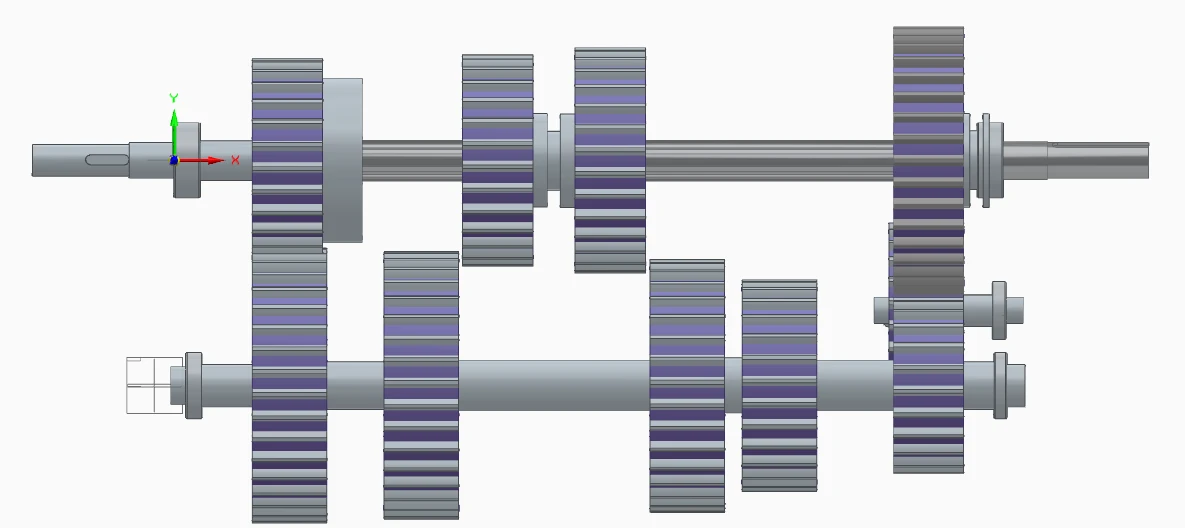
All work indicated below are my own and individual contribution. The project was a group project & listed below is a summary of my work on the project. It was one of our earlier projects that was graded as part of our Machine Design academic module.
Analysis & Design
My major contribution to the project was the gear ratio selection, gear design, housing design and bearing selection.
Gear ratio selection
The required ratios were obtained from an industry survey, by tracking the speeds & power used to process various stages of the seed oil extraction. The survey was limited to machines of the same or similar capacity/model.
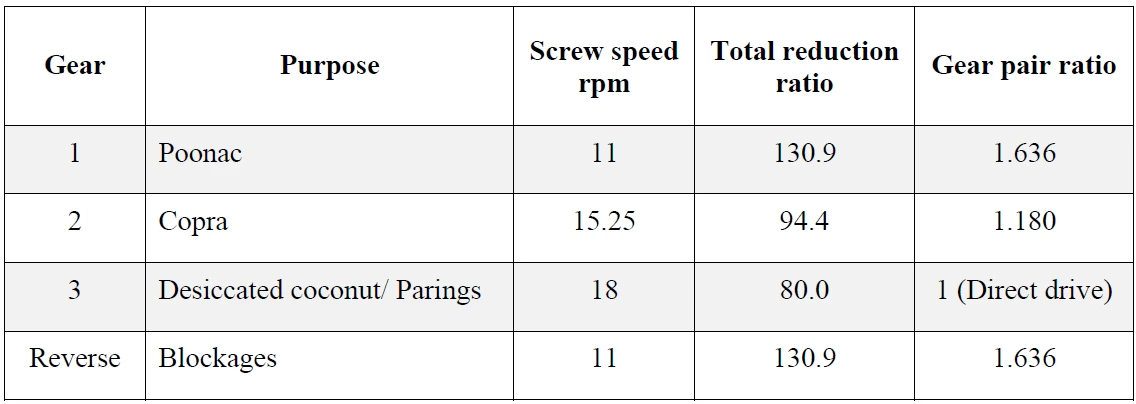
The gearbox was the 7th Stage of reduction. This allowed to reduce the cost & size of the proposed solution.
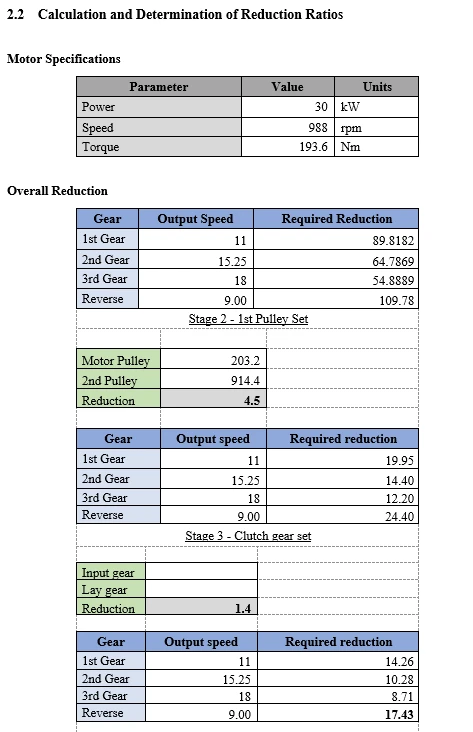
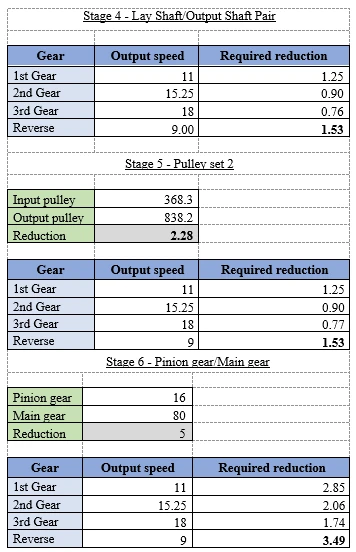
A sliding mesh gearbox design was selected for the application, given that speed setting only needed to changed during startup or maintenance. This bypassed the need for gear synchronizers.
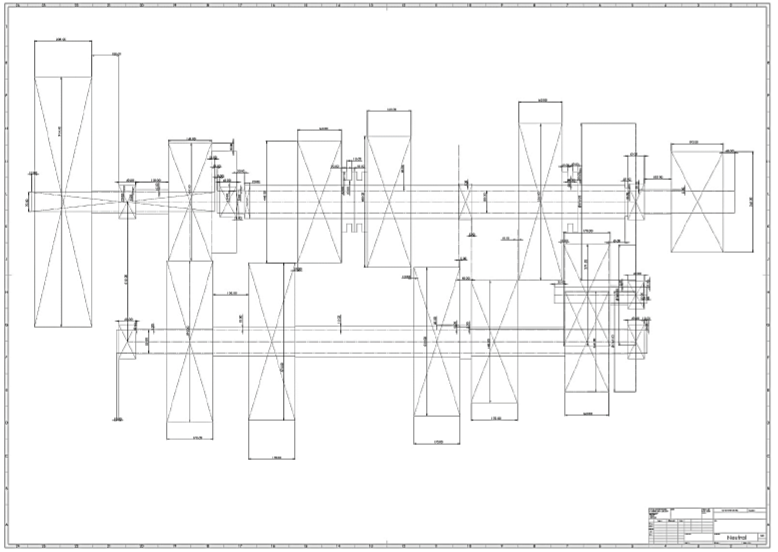
The design of the gearbox was based purely on established analytical equations.
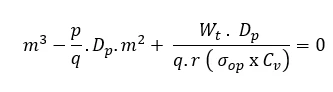
In order to derive the ideal module, I derived an algorithm & cubic equation which used Cardano’s Equation to derive the real cubic roots of the equation.
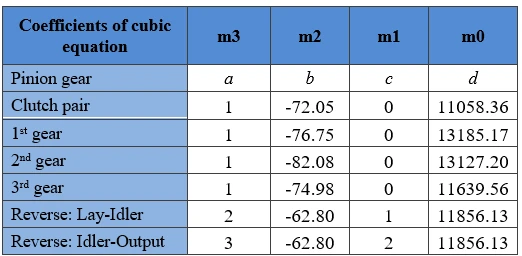
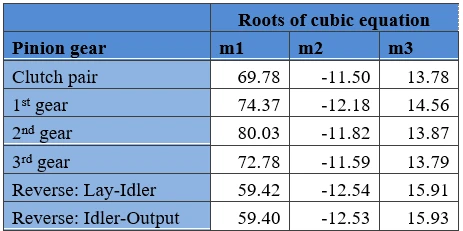
The selected module of 16mm was derived as the closest approximation from the available standard module sizes.
Static loads & Dynamic loads were determined based on the determined gear ratio & module for each of the gear pairs, following which Static & Dynamic loads were calculated using appropriate load factors & the face width was selected so as to be made of cast iron (cast iron was selected as the material of choice given the size of gearbox, and weight is not a major concern since the machine is immobile).
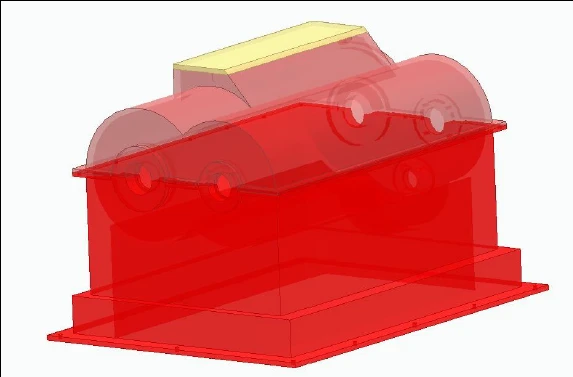
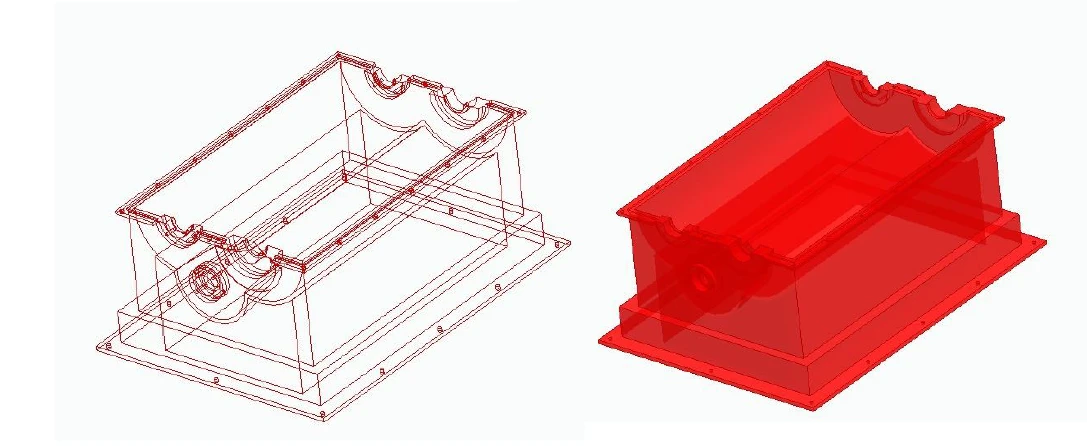
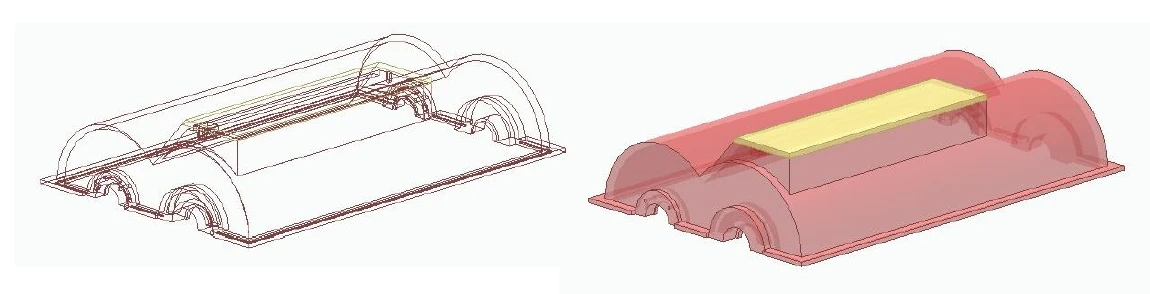
My teammate determined the minimum shaft widths for which I proceeded to determine the appropriate bearings. The use of spur gears and high radial loads prompted the selection of primarily roller bearings. For the purpose of assembly, a split housing was considered.
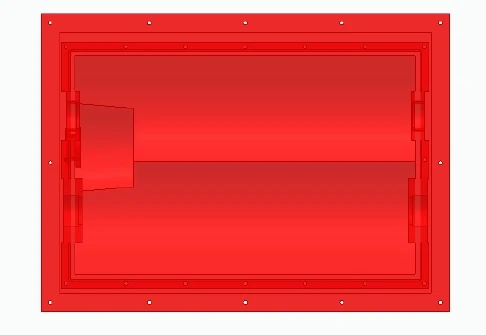
When designing the housing, wall thicknesses and flange sizes were determined to bear the maximum static load, while retaining features such as sealant grooves for effective sealing after assembly.