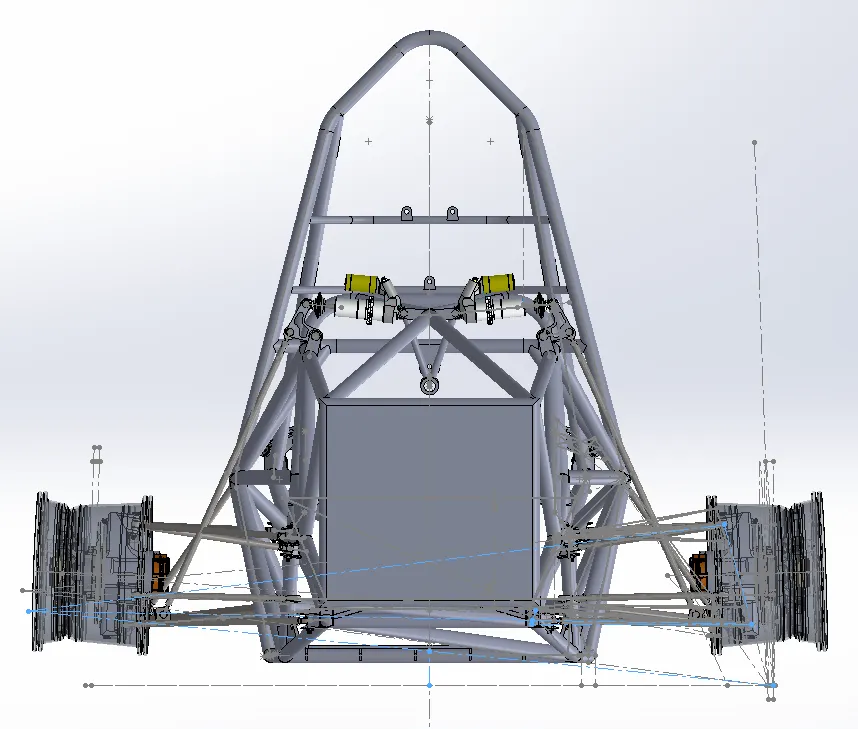
Wheel Hub Design

All work indicated below are my own and individual contribution.

Project Overview

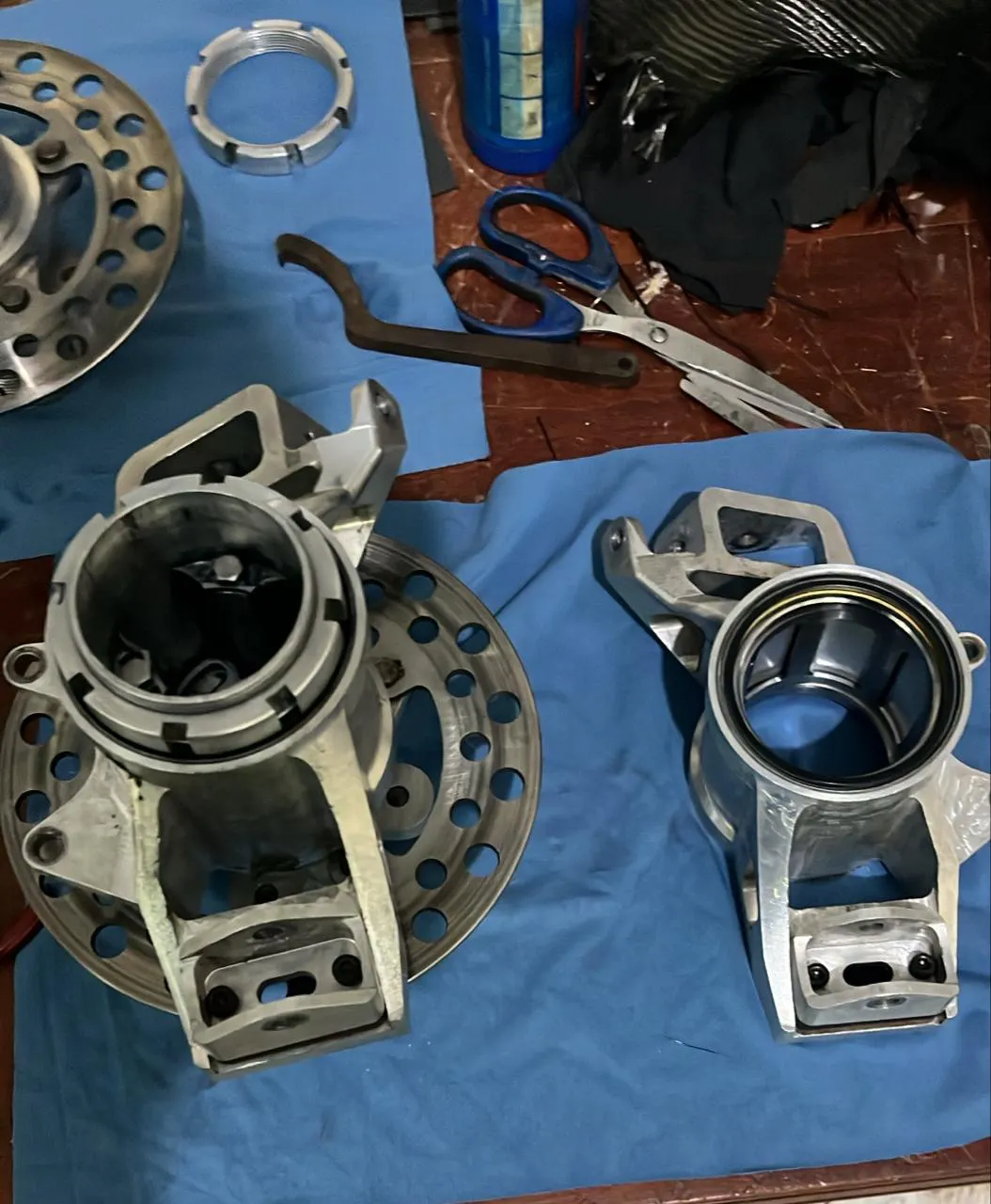
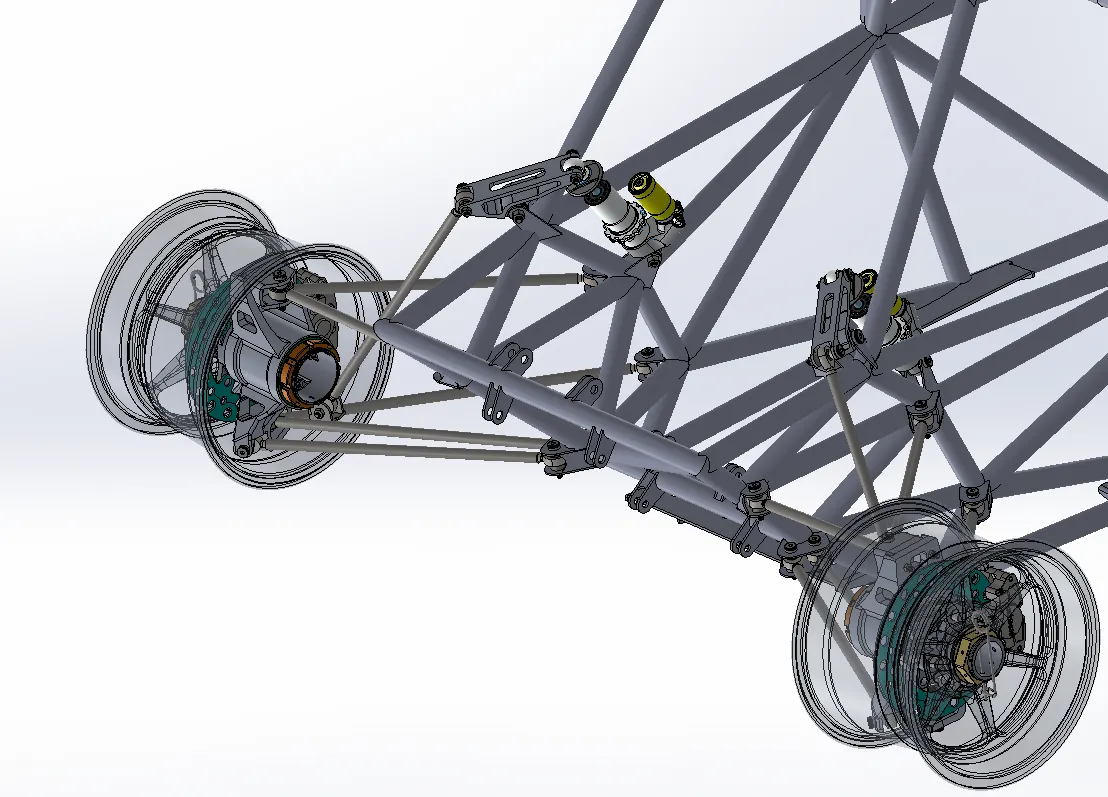
The E2 (our 2nd Car) was initiated in 2024. The wheel hubs were components I (as team lead) decided to finish early on, as they are components that significantly affect the suspension’s packaging. What entailed was weeks of extensive literary review, cost estimation, initial designs & iterative optimization.

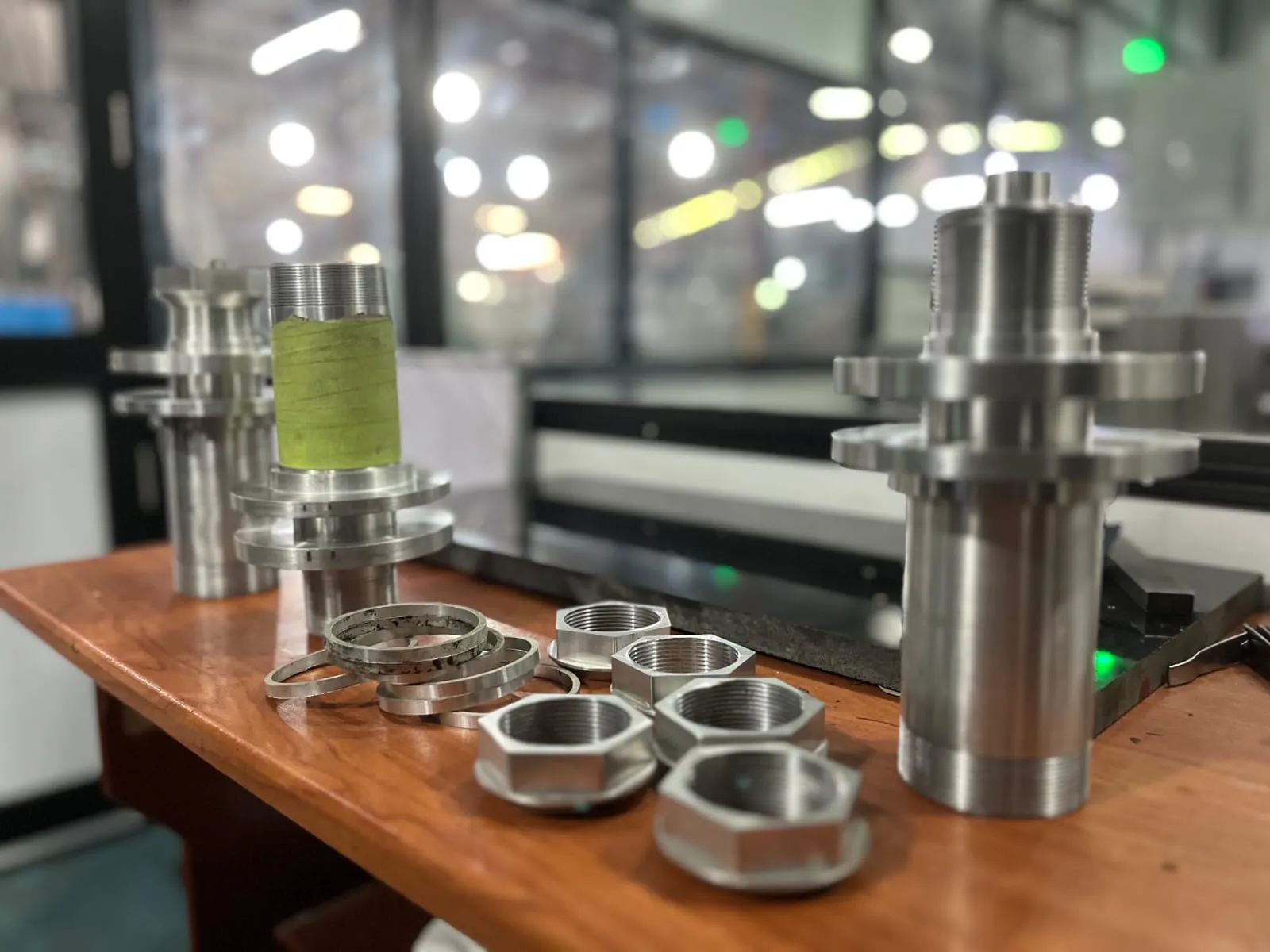
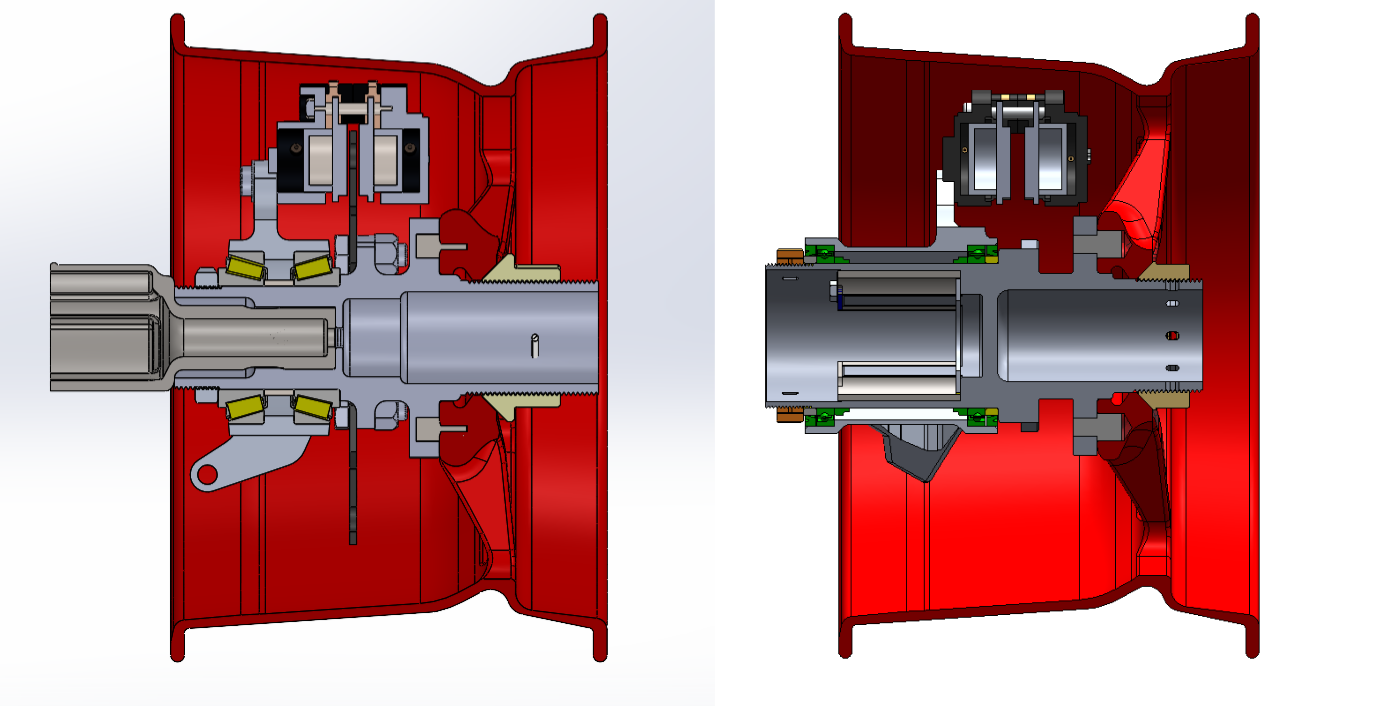
The 2023 Wheel Hub (Left) & the 2024 Wheel hub (Right)

Highlights

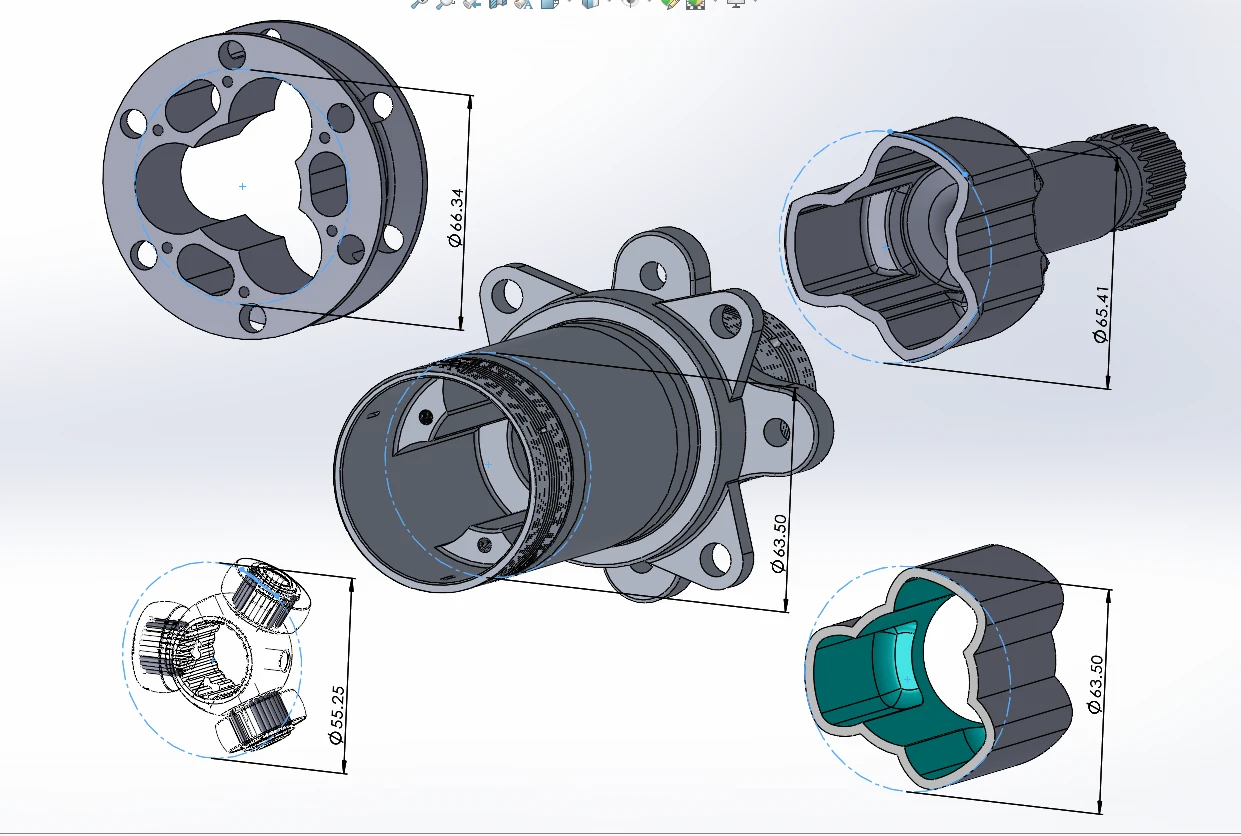
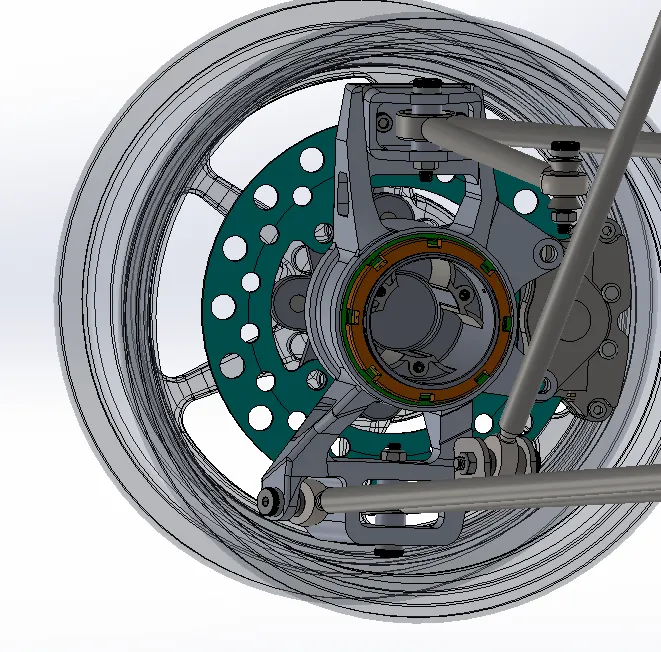
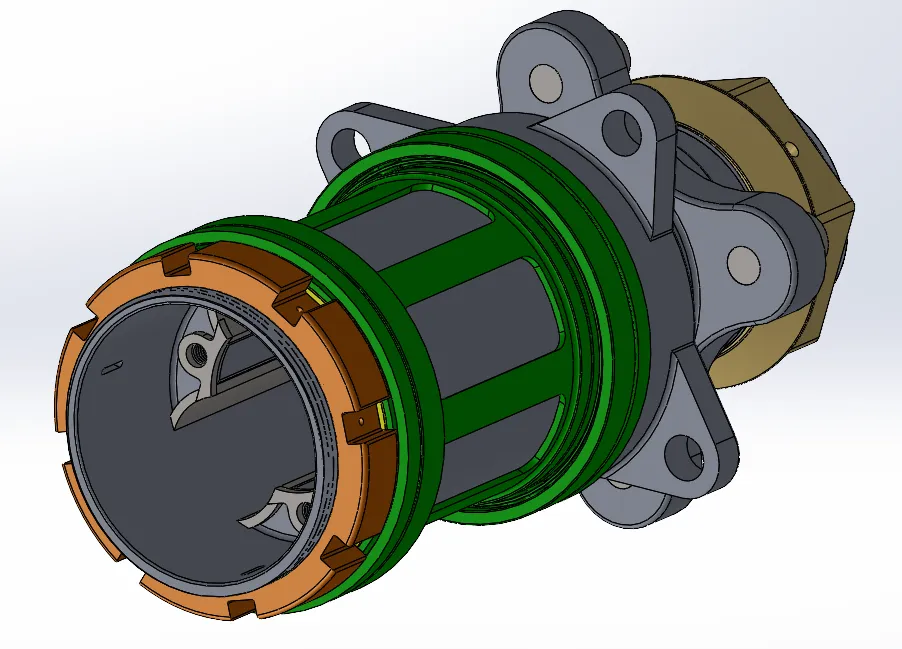
13-piece integrated tripod housing – 1st of its kind

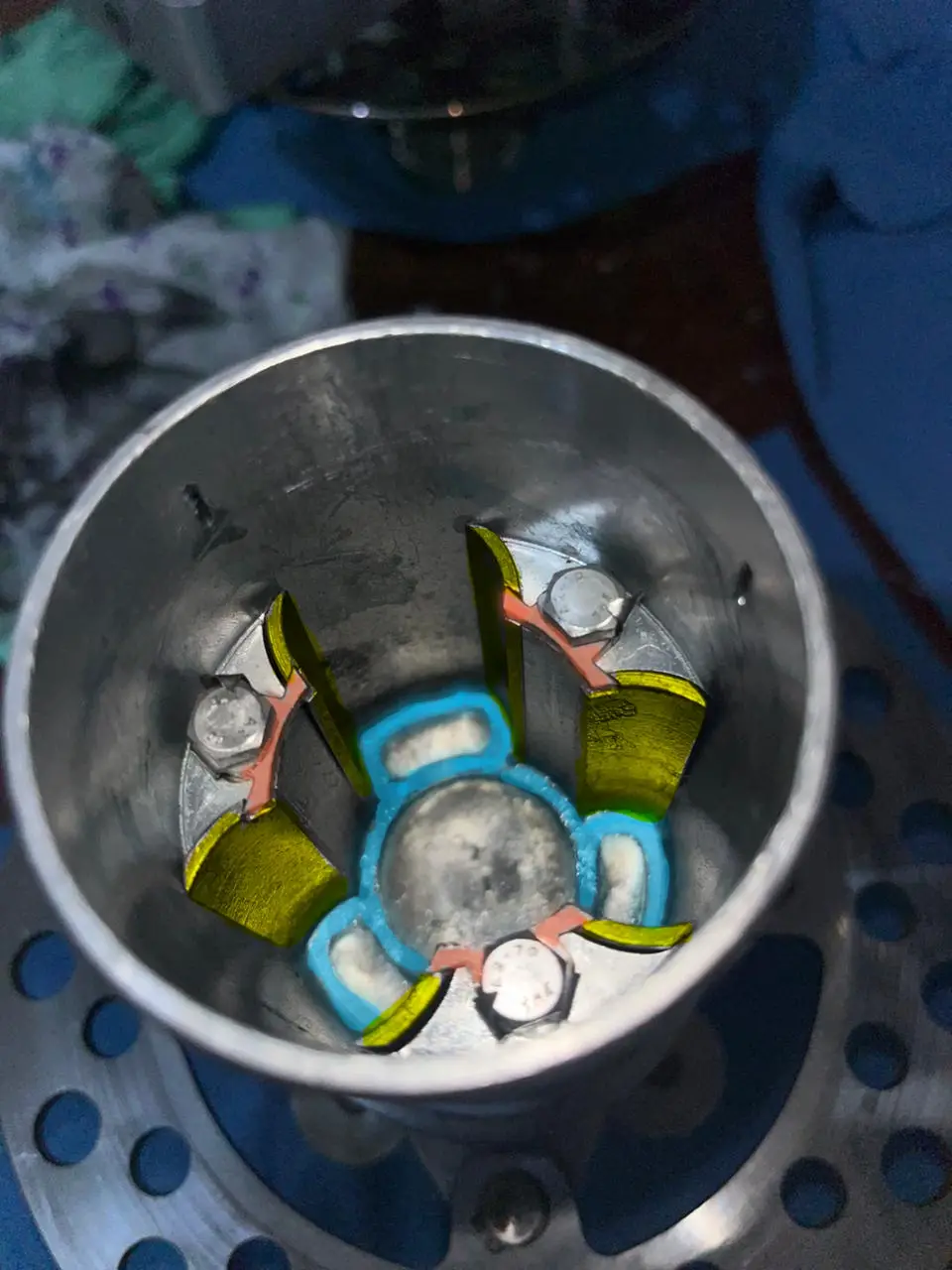
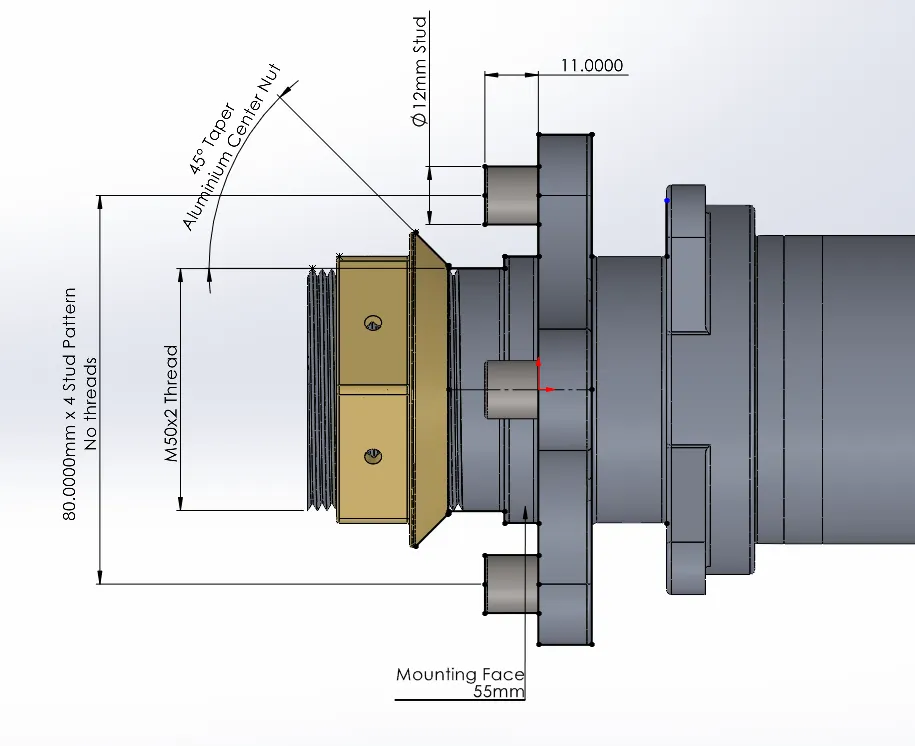
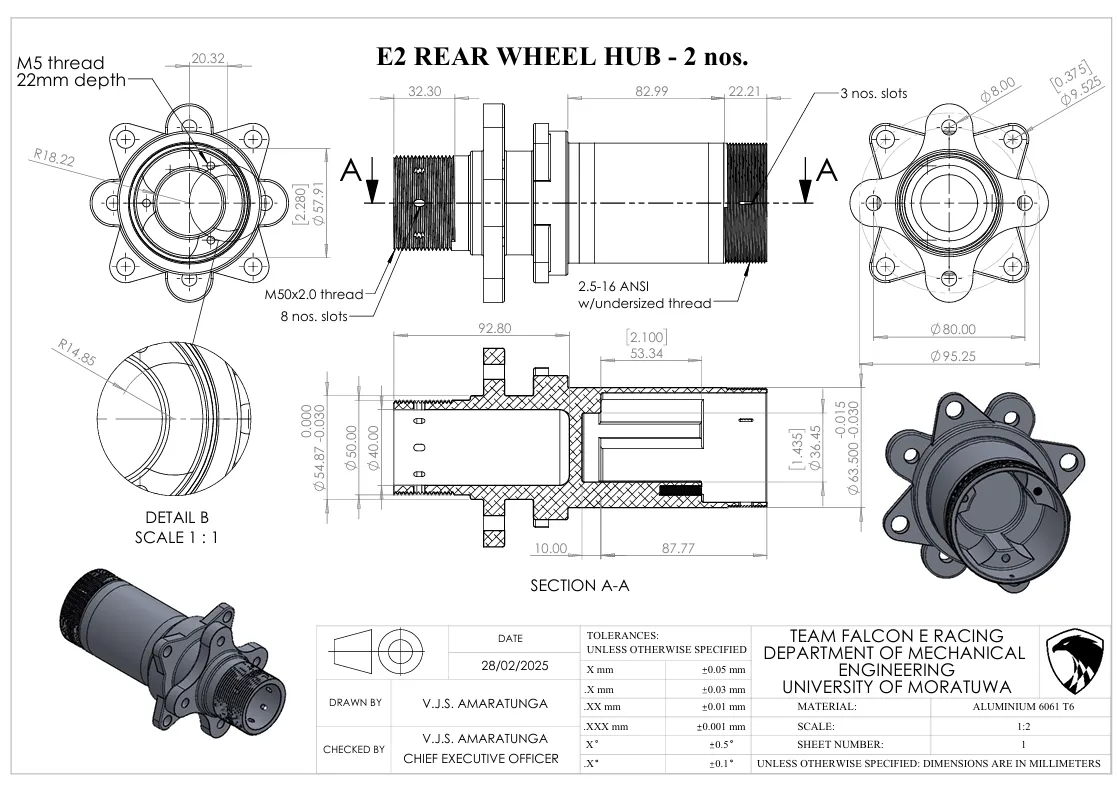
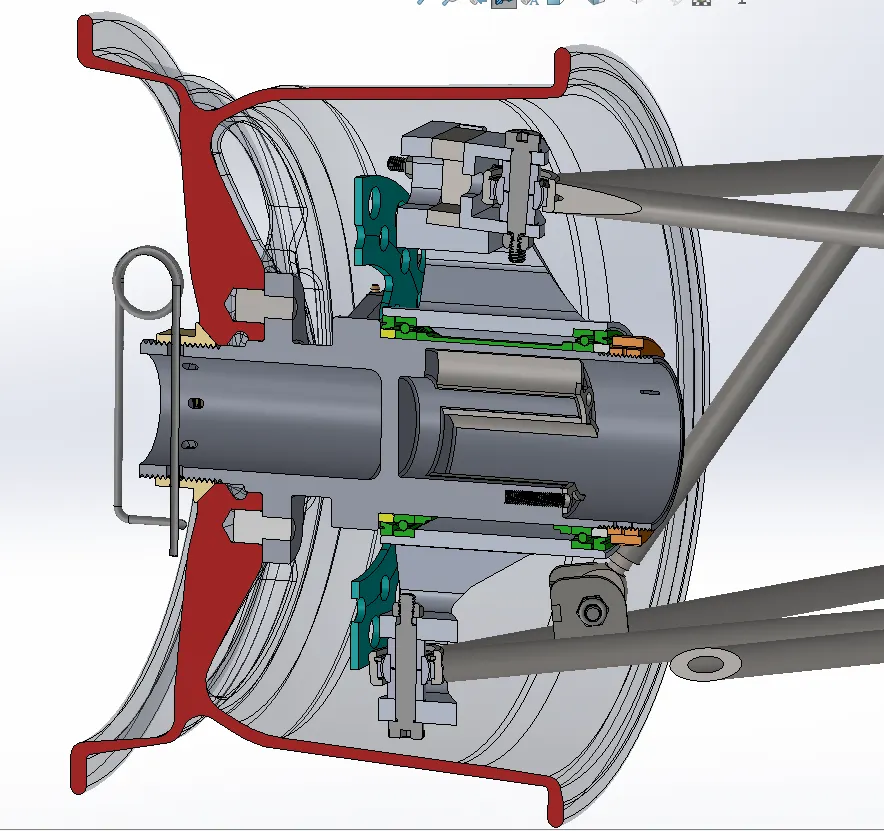
In order to reduce weight & make the assembly as compact as possible, while utilizing a standard commercial FSAE wheel, the tripod housing was integrated into the wheel hub. Whereas other teams achieve this by utilizing a steel hub, 1-liner or 3-liner design, my design comprises of a 6-liner system which is cheaper, lighter & significantly more compact.
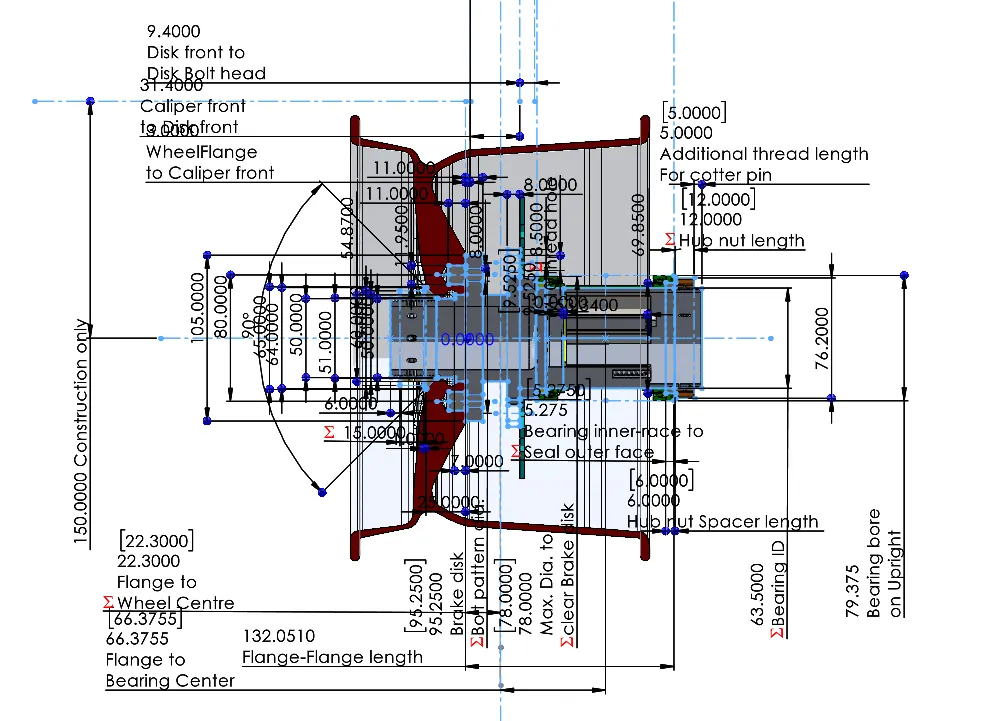
The only 2.5 inch (63.5mm) bearing compatible design

All other hub designs with integrated-tripod housings required bearings with an ID>2.5 inches, unless the whole hub is made of a single material such as steel-which results in a much heavier component if done so.

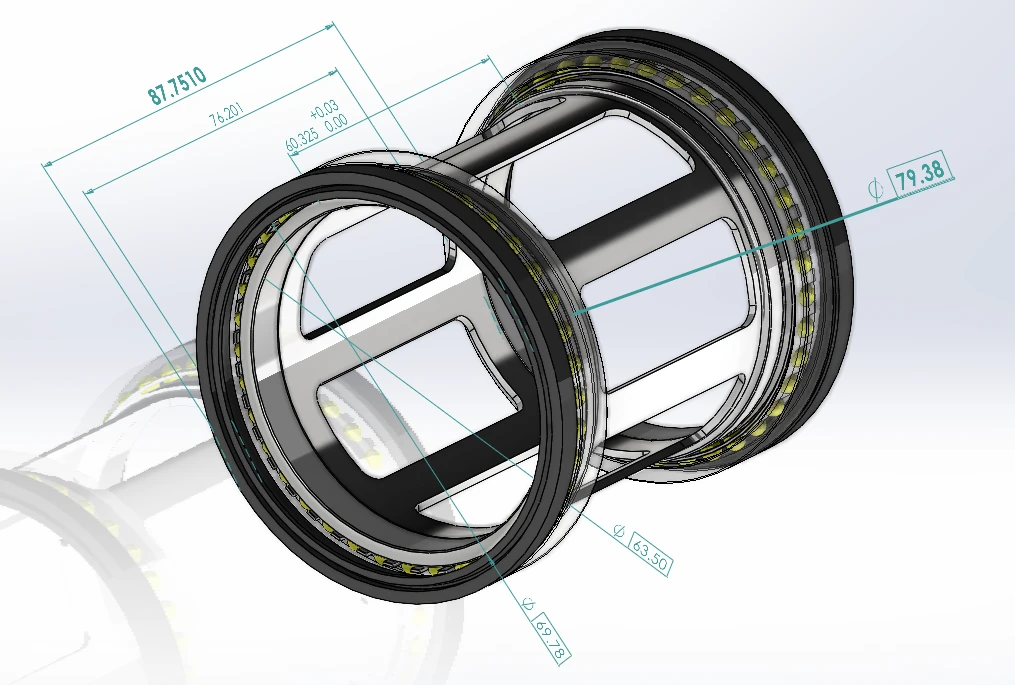
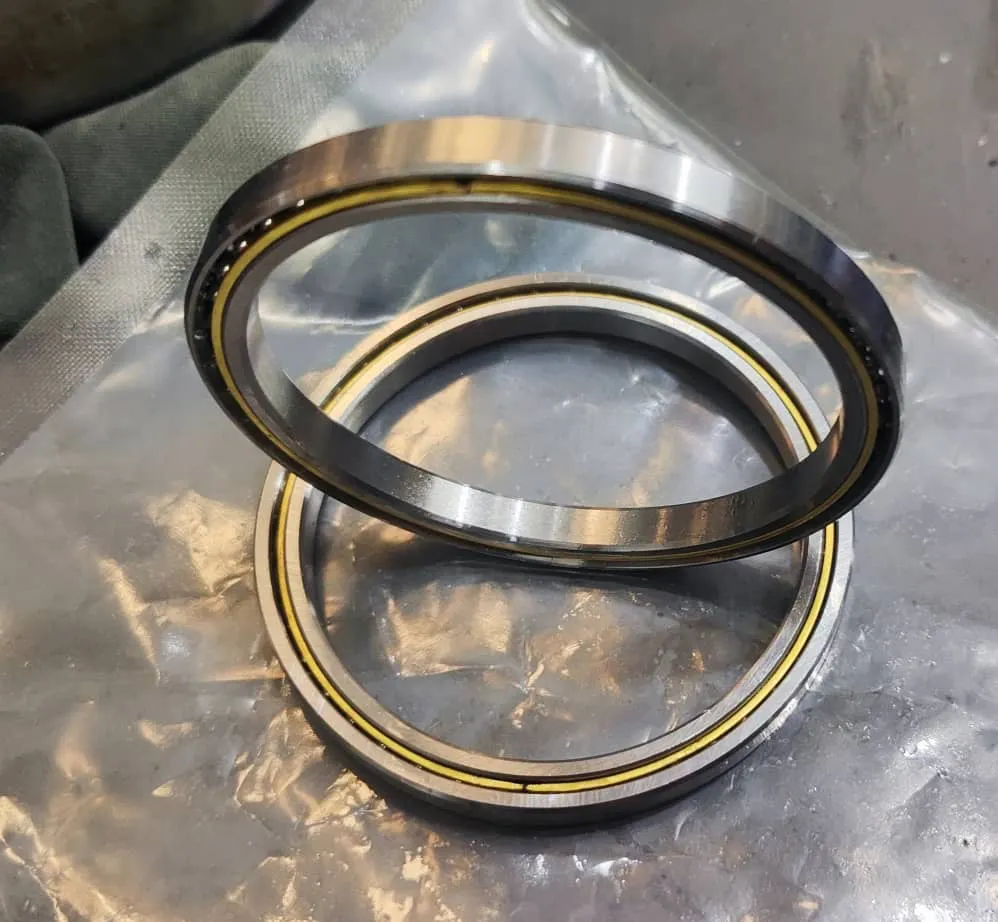
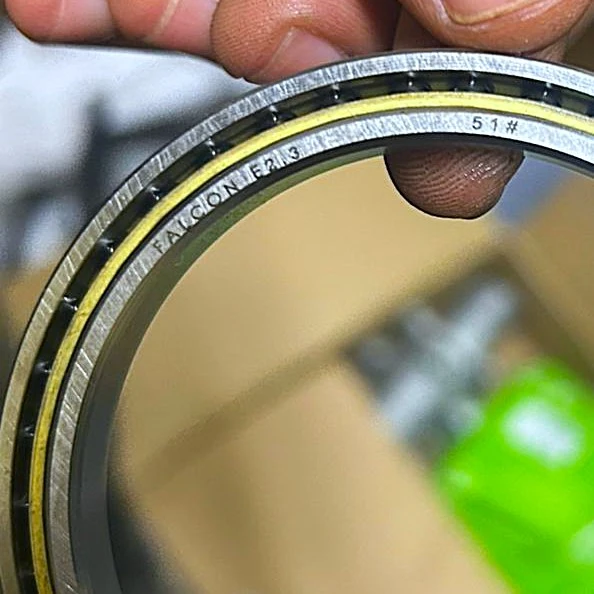
57% lighter, Compact & Sealed Custom Bearing-assembly

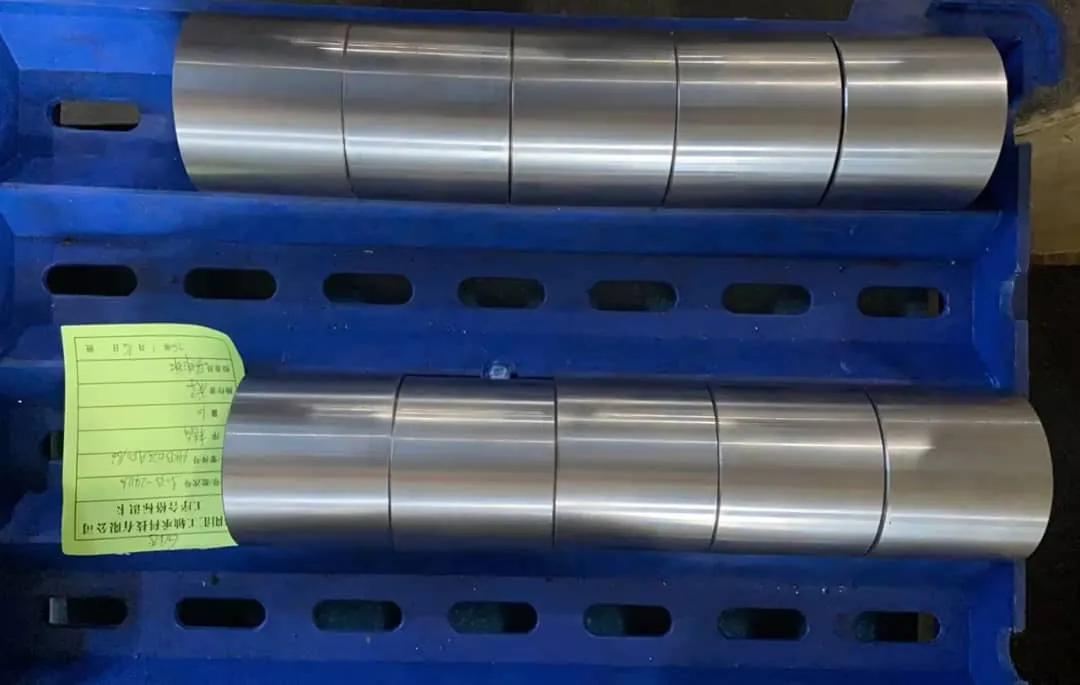
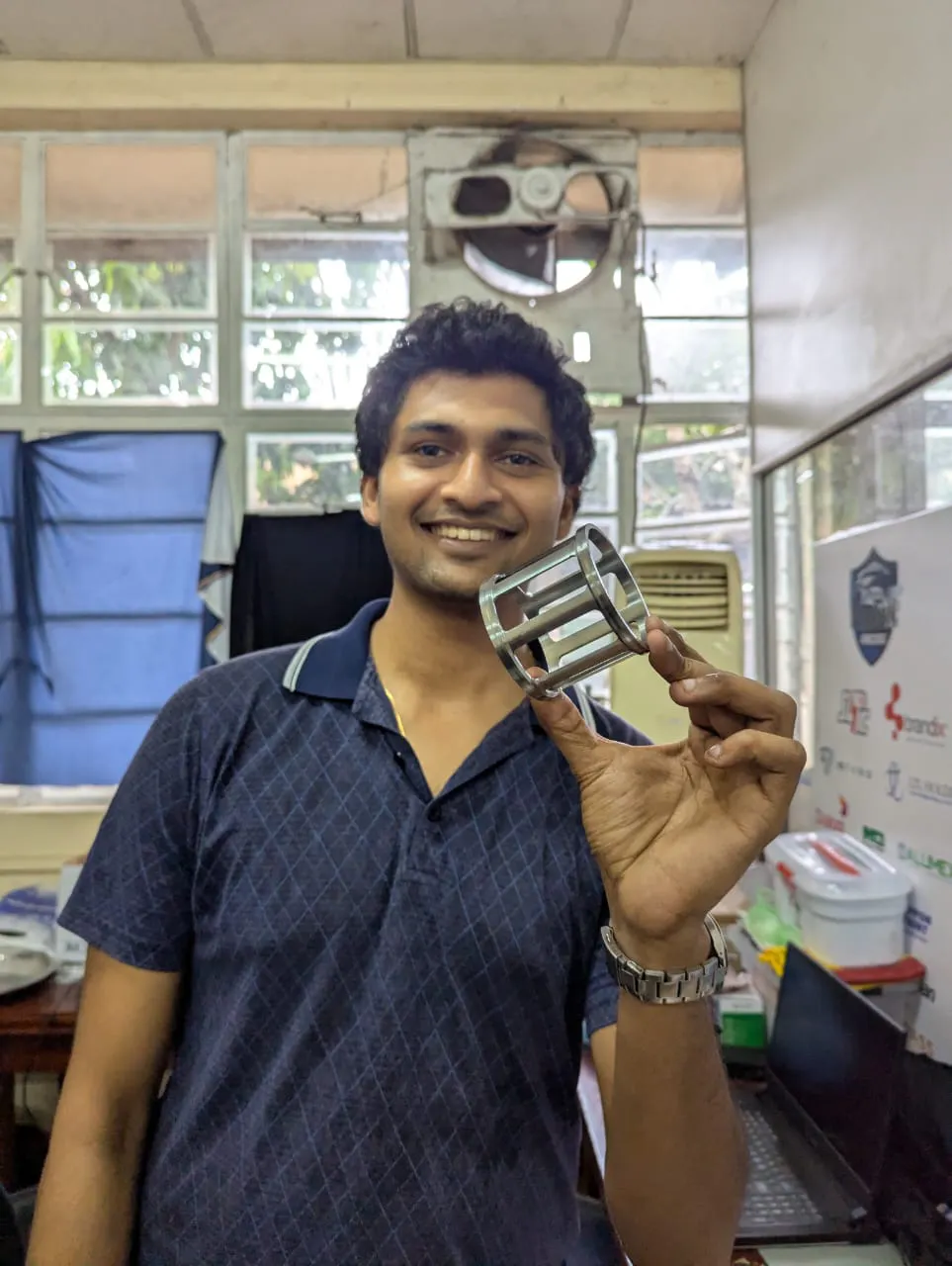
The bearing assembly, comprises of thin-section angular contact bearings in back-to-back arrangement, a customized & matched spacer made from bearing steel & thin grease seals. The entire assembly weighs less than 300g, whereas the bearings on the previous design (image available at the top of the page) alone weigh 688g.

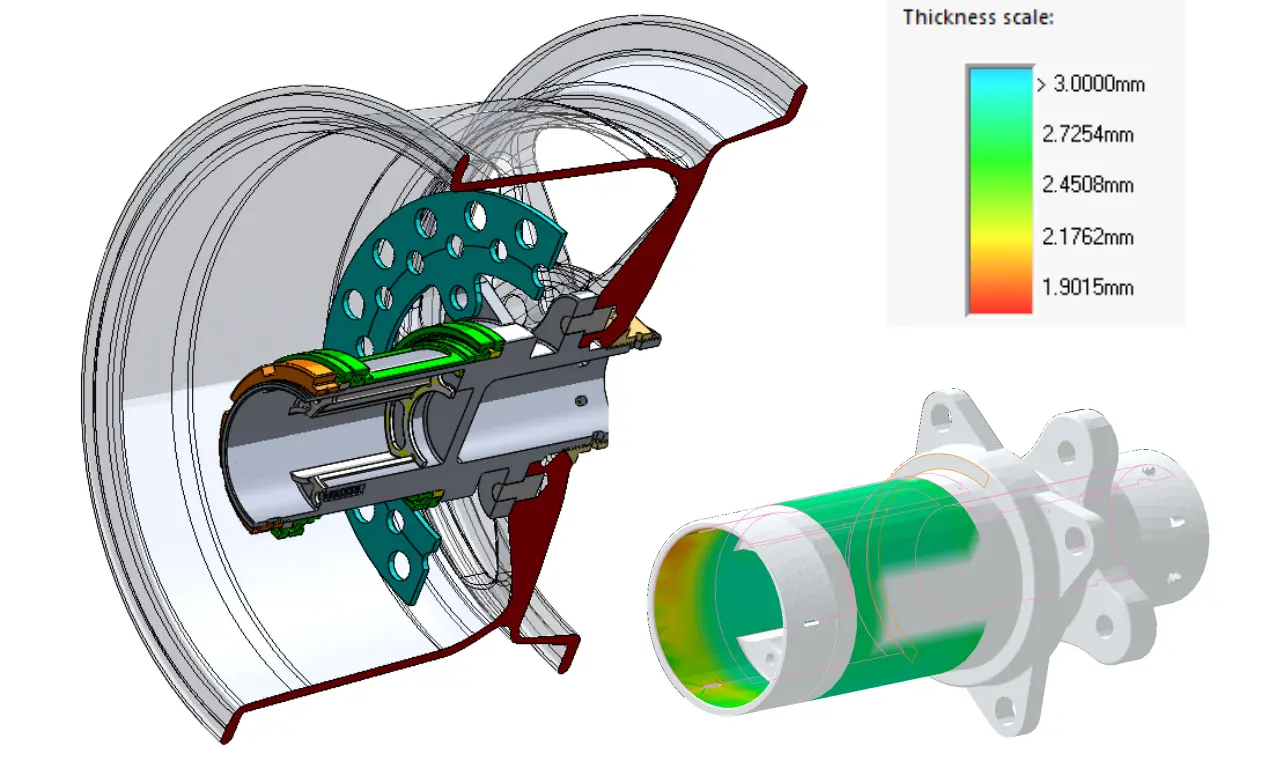
Iterative optimization & weight reduction

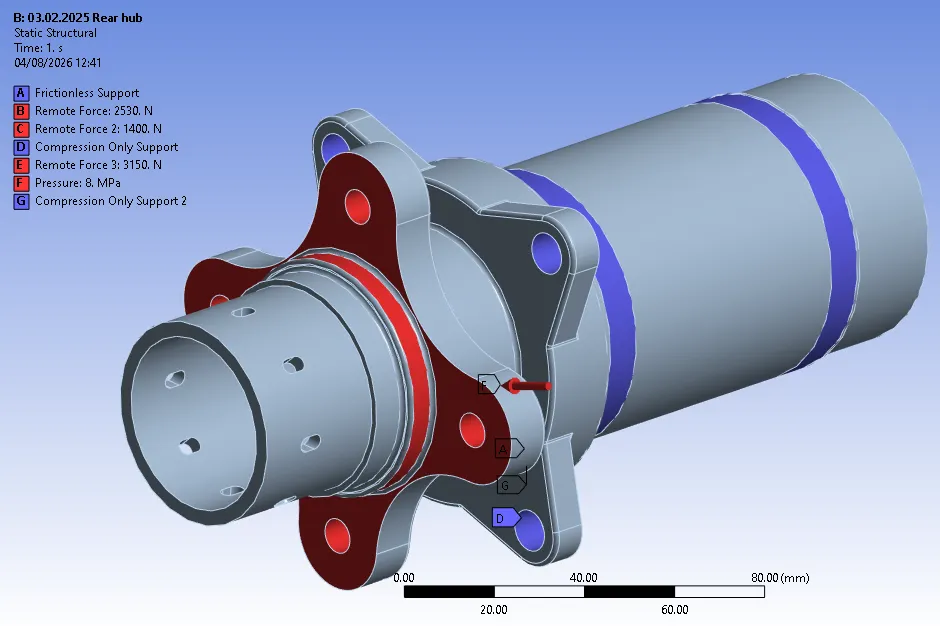
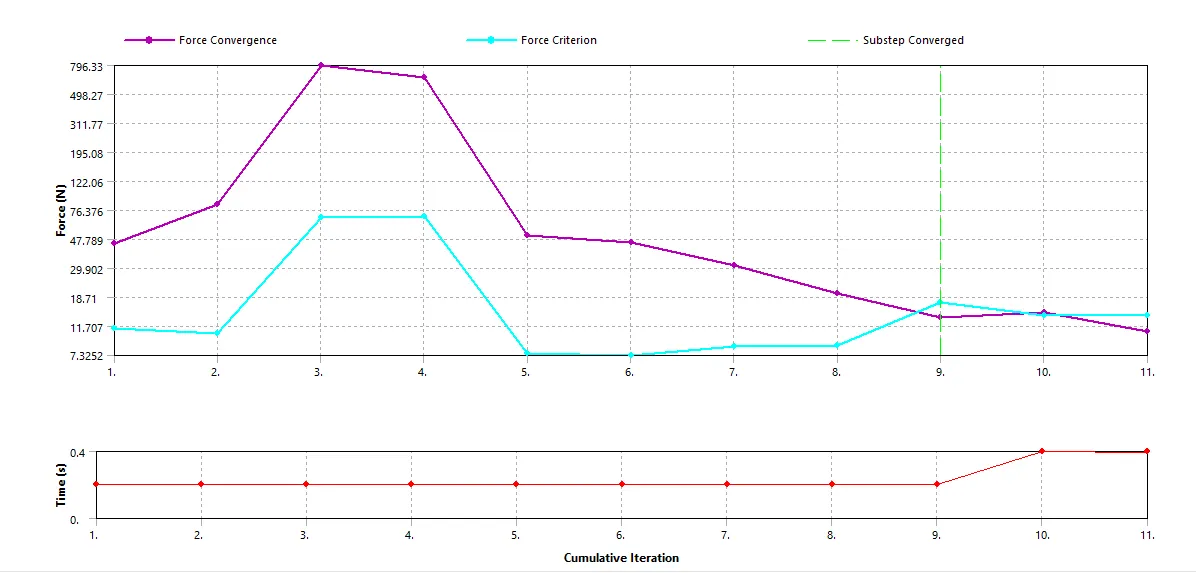
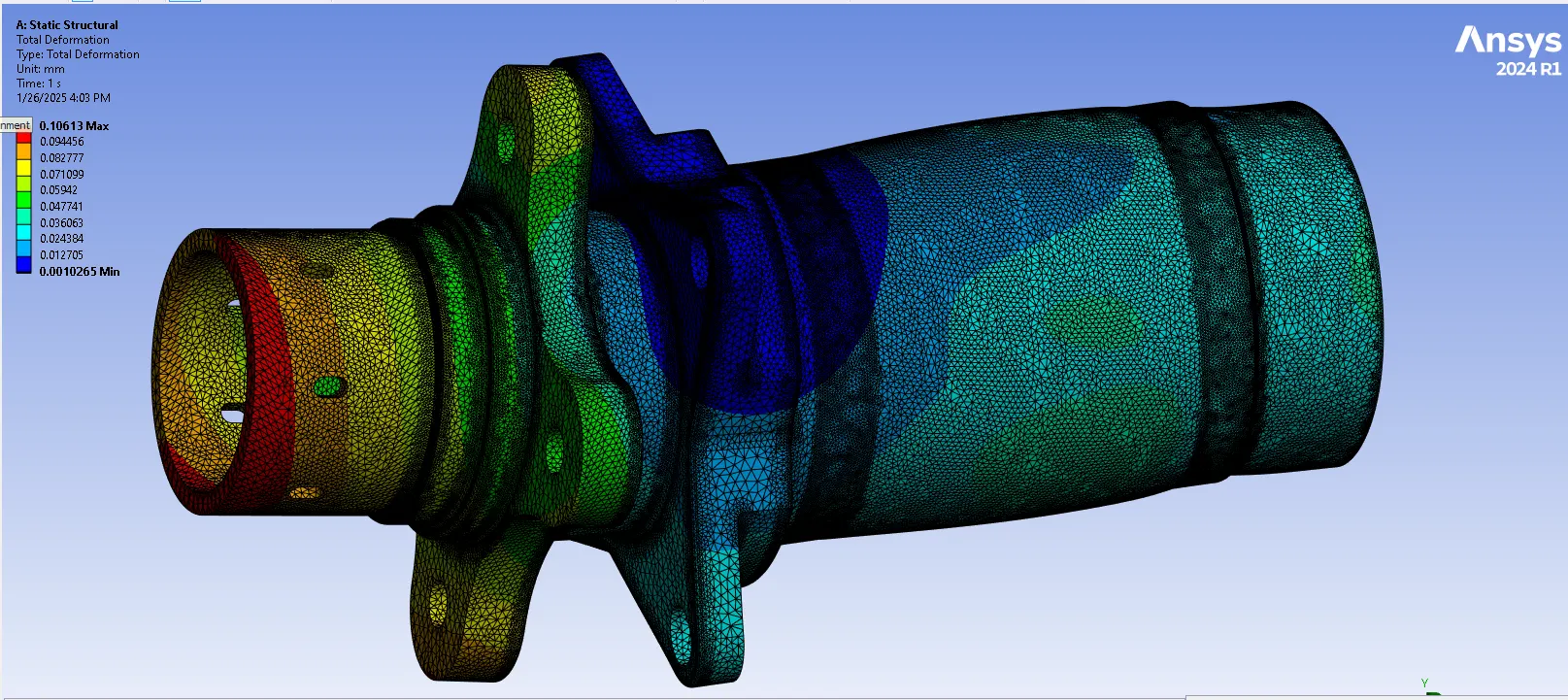
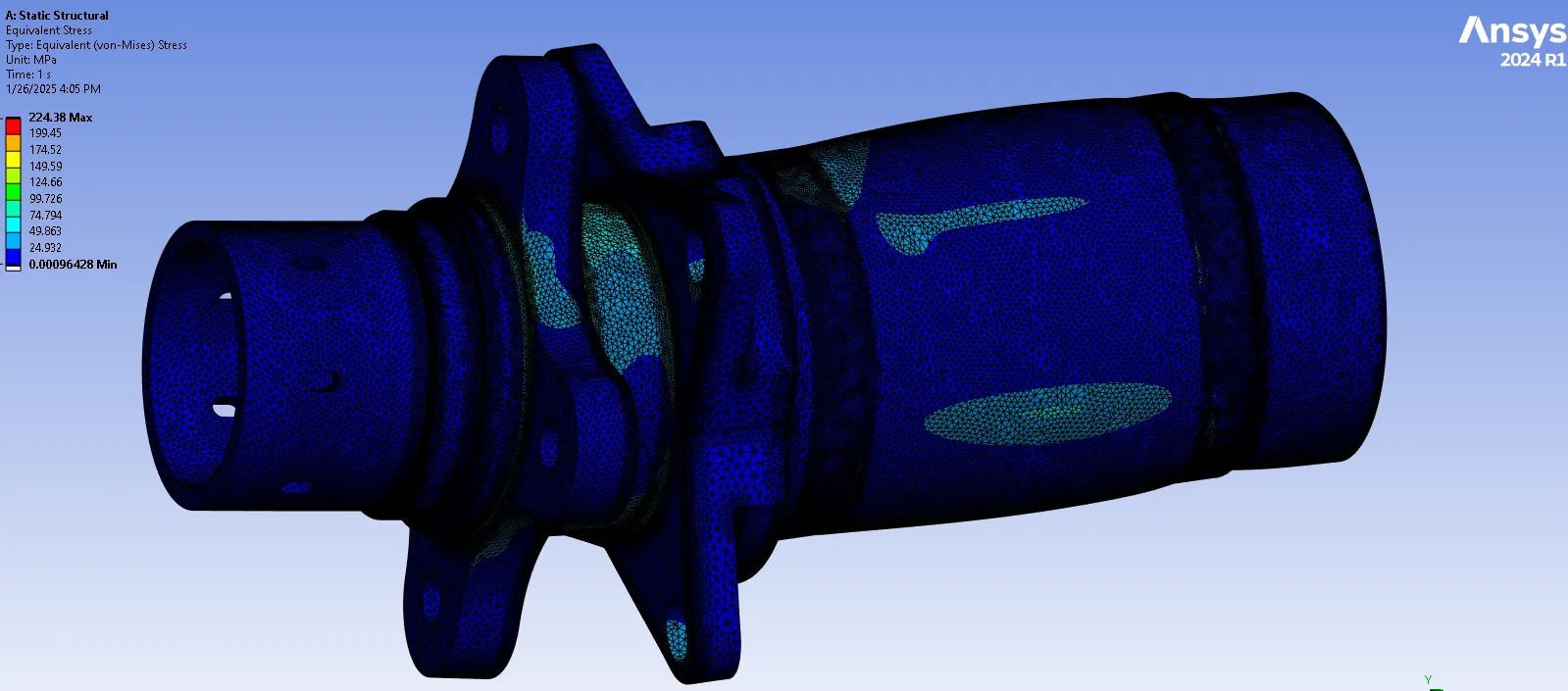
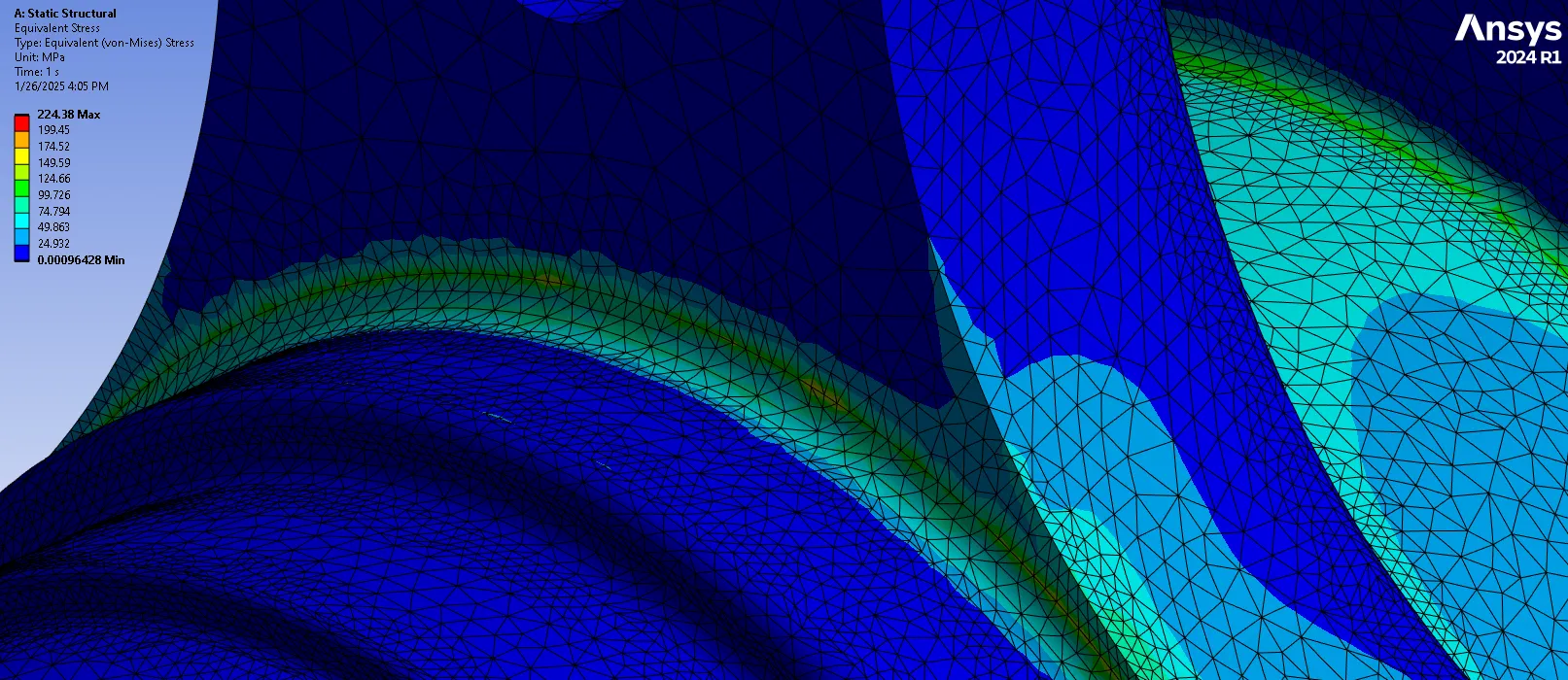
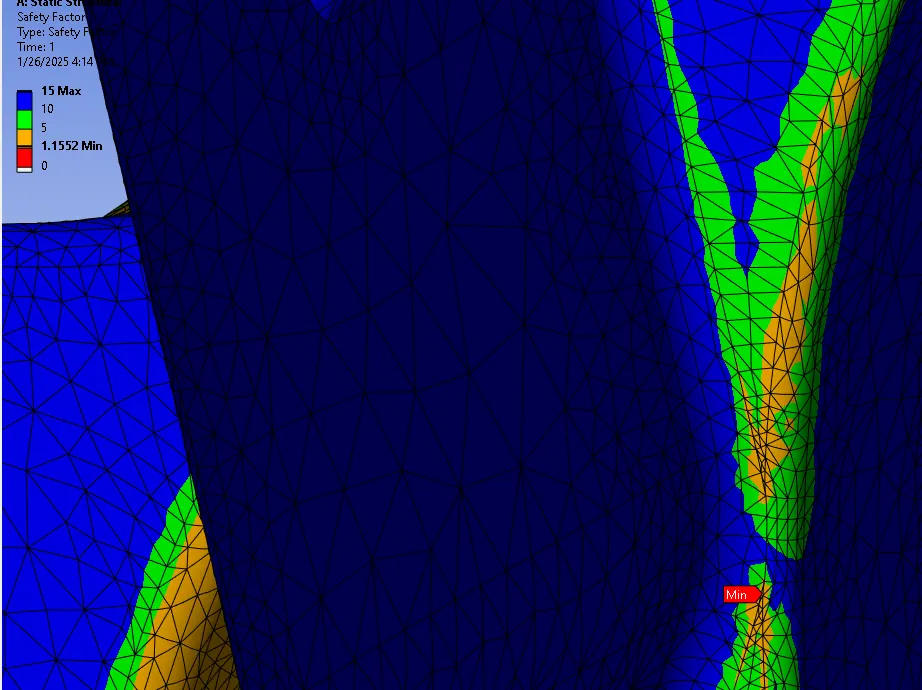
The hub itself was simulated on ANSYS for stress analyses, followed by a fatigue analysis in order to check if the hub would match the bearings’ service life estimated at 1000km of racing.

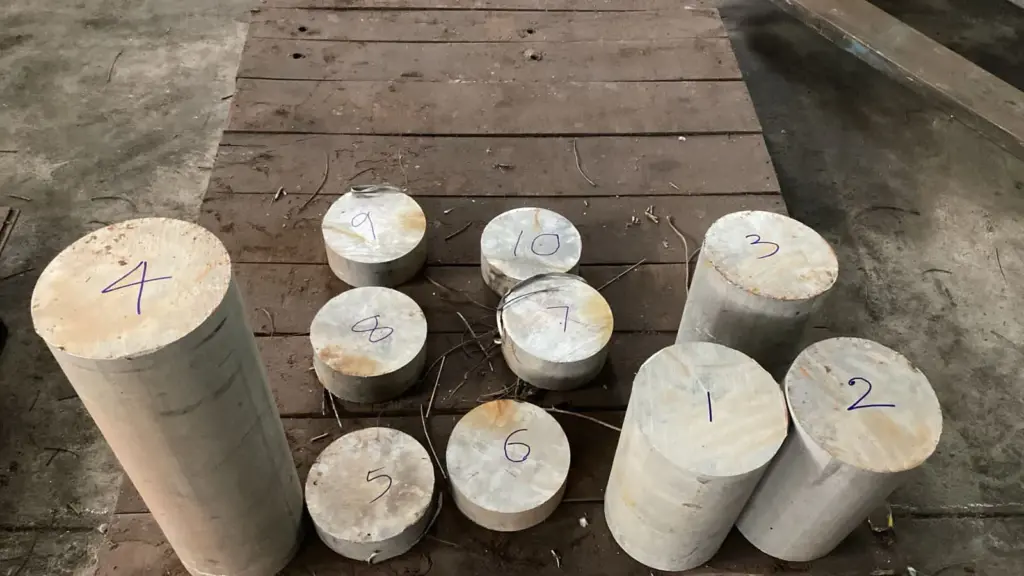
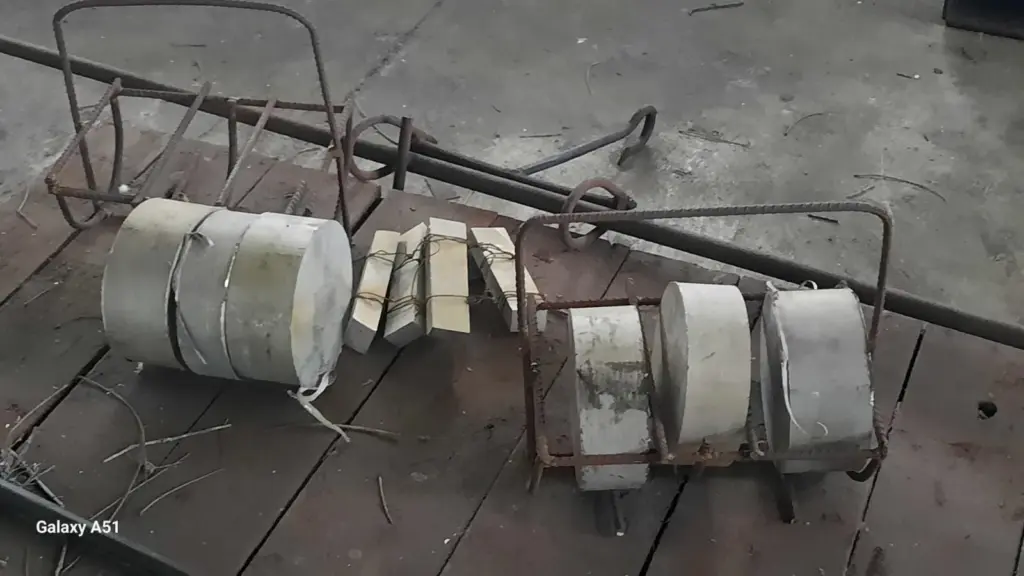
Heat treated Aluminium

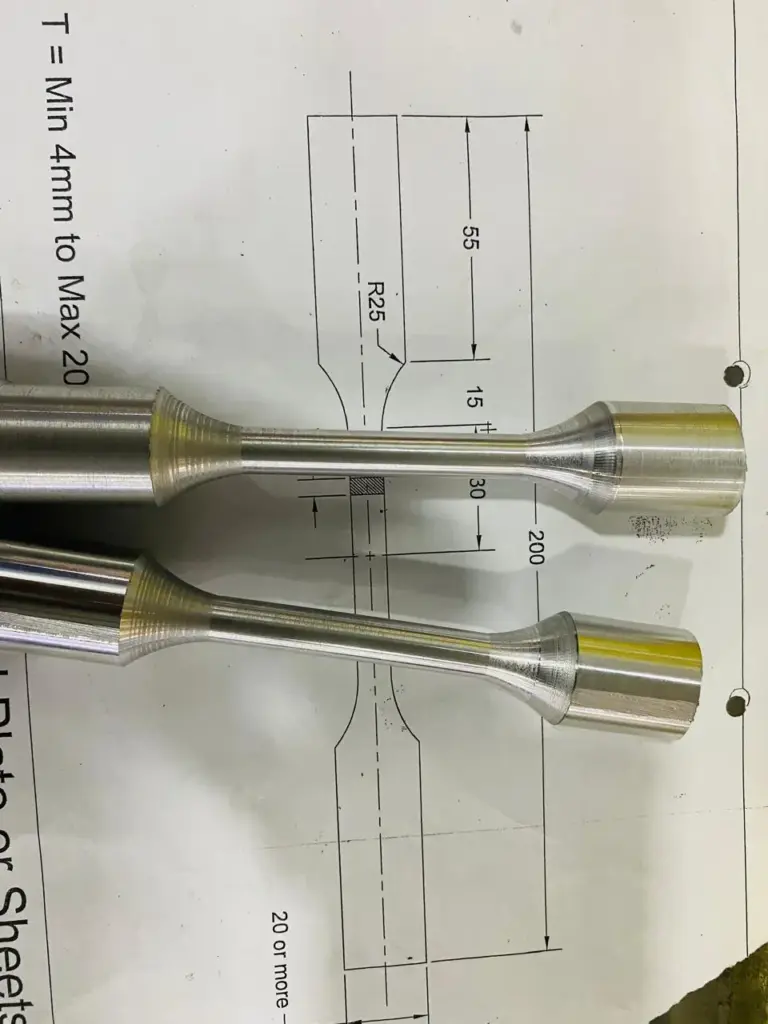
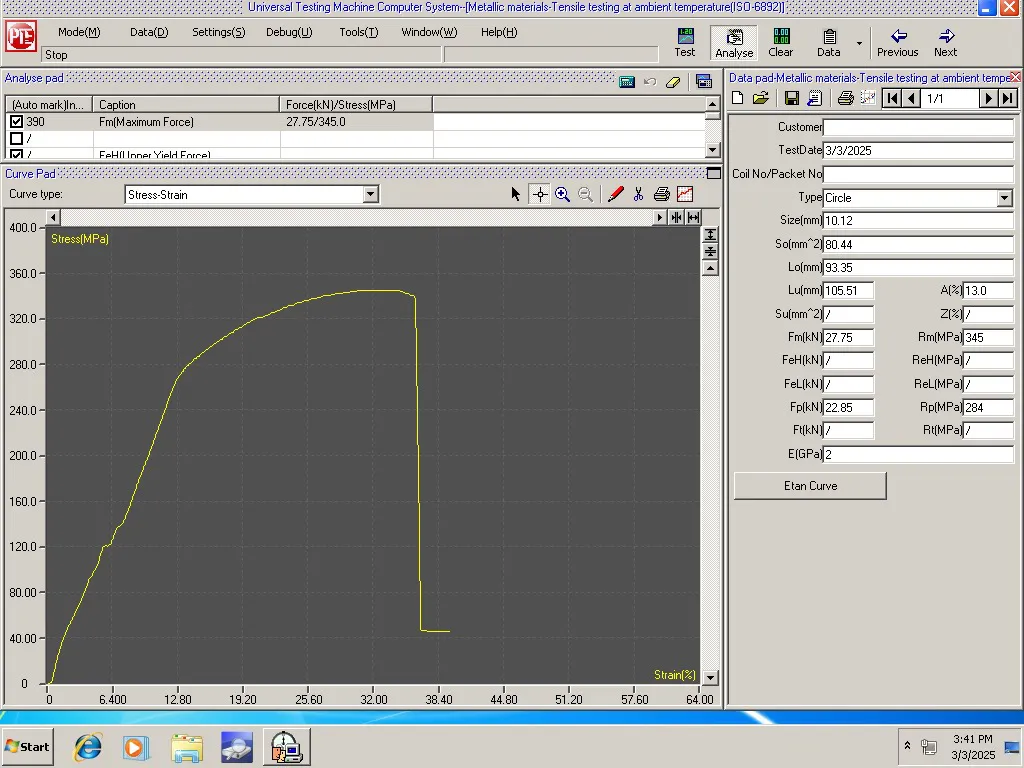
My team & I heat treated are own Aluminium to produce 6061-T6 by Quenching & Tempering each batch successively

The obtained stress plots containing the minimum yield stress considerably outperformed the 276MPa value used for engineering analysis.